



 【关注川源科技HiCY】
-

 服务热线 400-700-2017
服务热线 400-700-2017
服务热线 400-700-2017
搜索更多信息

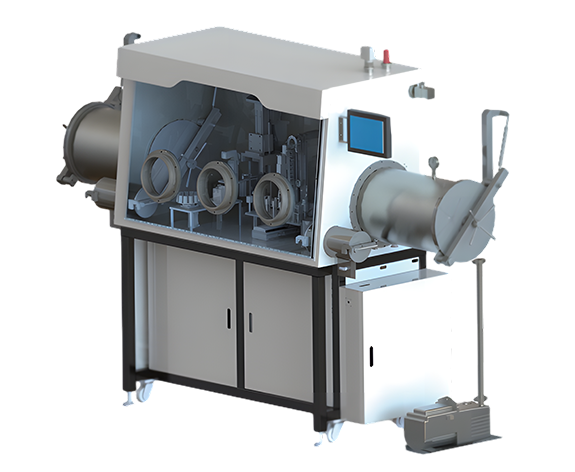
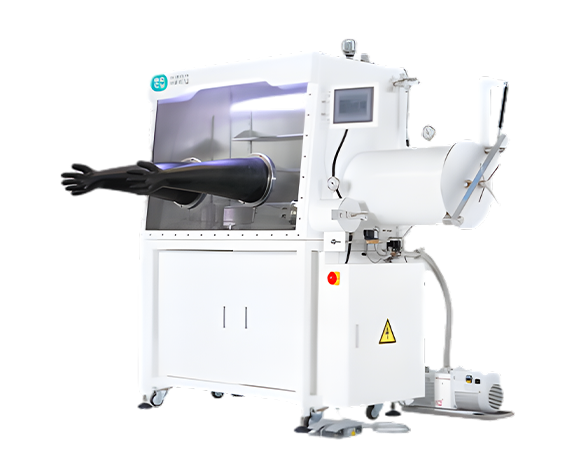

We are committed to solving the problems of low efficiency, large manual errors and poor consistency in traditional button battery assembly. Through automation and high-precision control, we improve the efficiency of material research and development verification.
Application Areas

·Automated production and high-throughput assembly
Achieve fully automatic assembly of button batteries
·Button battery packaging operation
Complete the entire process of battery raw material assembly, pressing and unloading
Battery test immediately after installation |
XYZ three-dimensional guide rail |
Scalable and customizable weighing platform |
Model | All-in-one | split type |
Sample throughput | 14 (customizable and expandable) | |
Assembly efficiency | 2min1pc(speed adjustable) | |
Accuracy | XYZ rail positioning | |
Battery Specifications | CR2025 button battery (button batteries of other specifications can be customized) | |
Rated power | 300W | |
Power supply | 220V/50Hz | |
Weight | 90kg | |
Scalability | Customizable weighing platform and electrolyte parameters | |
Size | 900 X 690 X 1650mm | 850 x 650 x 615mm (fits glove box) |
Button cells consist of positive and negative electrode shells, active material layers, separators and electrolytes. They are packaged in an inert environment after coating and pressing. Common types include lithium-based (CR), alkaline (LR) and silver oxide batteries, which are suitable for micro devices and electrochemical testing.
Button battery preparation process: |
Mixing → coating → rolling → punching → weighing → baking → assembling → testing
Button battery assembly: |
Positive electrode shell → electrode → electrolyte → diaphragm → electrolyte → lithium sheet → support → negative electrode shell

 | XYZ three-dimensional guide rail + partition layout ·Feeding platform: the material box is easy to disassemble, and the material size is precisely matched with the material box; ·Material assembly platform: multiple suction cups are designed, and the clever design ensures that the material boxes do not interfere with each other; ·Encapsulation platform: precise encapsulation, stable pressure, and effective guarantee of encapsulation effect ·Rotation platform: simple and reasonable mechanical structure, stable clamping of batteries, high stability; ·Finished battery storage platform: arc-shaped design with 14 battery storage positions, which can be quickly disassembled and convenient for customization and expansion. |
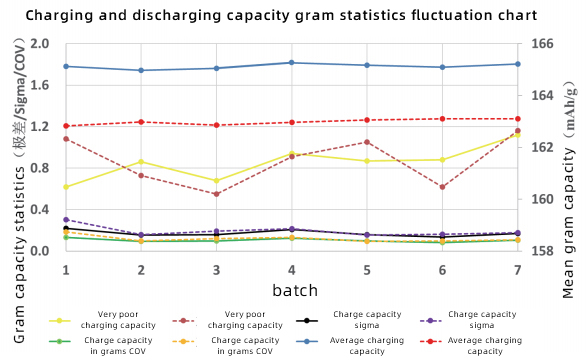
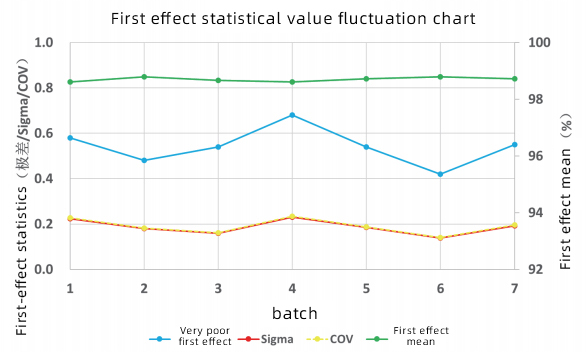
1. Automatic assembly of LFP positive electrode sheet |
·The electrochemical performance stability and consistency of the automatically assembled LFP half-cells are good. The range of each group of charge/discharge gram capacity is less than 1.2mAh/g; the sigma value of each group of charge/discharge gram capacity is less than 0.4; the COV value of each group of charge/discharge gram capacity is less than 0.2%.
·The electrochemical performance of the LFP half-cell was evaluated, and the performance evaluation deviation caused by operational differences in manual assembly was solved.
 |  |
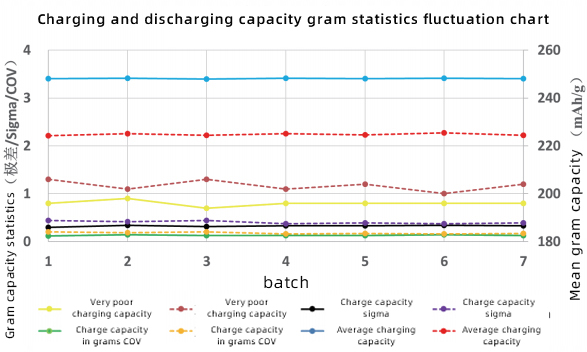
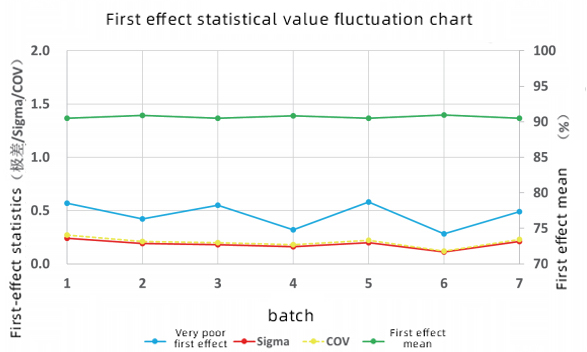
2. Automatic assembly of ternary positive electrode sheets |
·The first-efficiency stability and charge-discharge consistency of the automatically assembled ternary half-battery are good. The sigma value of each group of charge/discharge gram capacity is less than 0.44; the range value of each group of charge/discharge gram capacity is less than 1.3mAh/g; the COV value of each group of charge/discharge gram capacity is less than 0.2%.
·The electrochemical performance of the ternary half-battery was evaluated, and the data discreteness problem in the positive electrode sheet test was solved.
 |  |
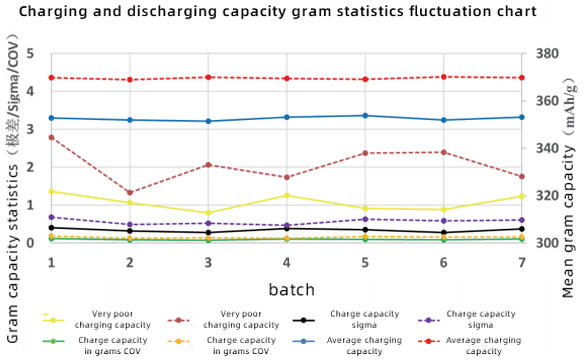
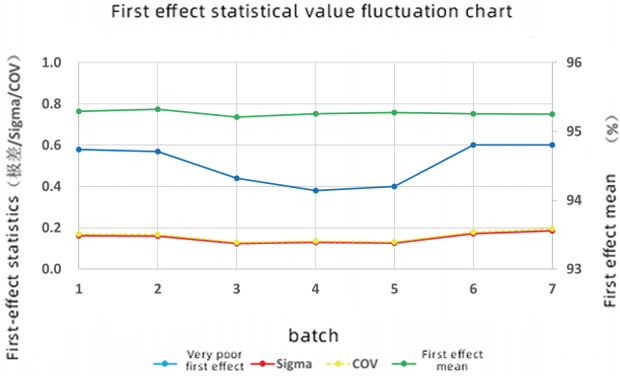
3. Automatic assembly of graphite negative electrode sheets |
·The gram capacity of the automatically assembled graphite half-cell has small fluctuations and good first-effect stability. The sigma value of each group of discharge gram capacity is less than 0.69, and the sigma value of each group of charge gram capacity is less than 0.41; the range of each group of discharge gram capacity is less than 2.79mAh/g, and the range of each group of charge gram capacity is less than 1.36mAh/g; the COV value of each group of charge/discharge gram capacity is less than 0.19%
·The electrochemical performance of the graphite half-cell was evaluated, and the test data consistency and first-effect stability of the graphite negative electrode sheet were improved.
 |  |
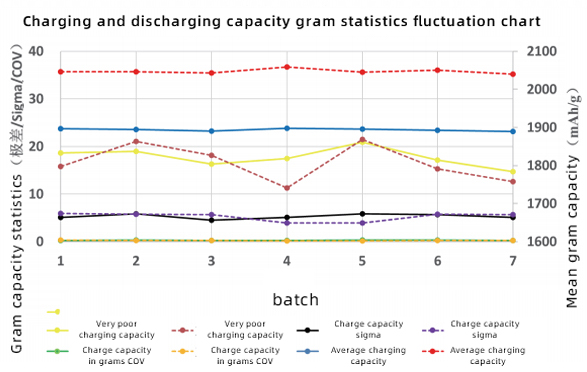
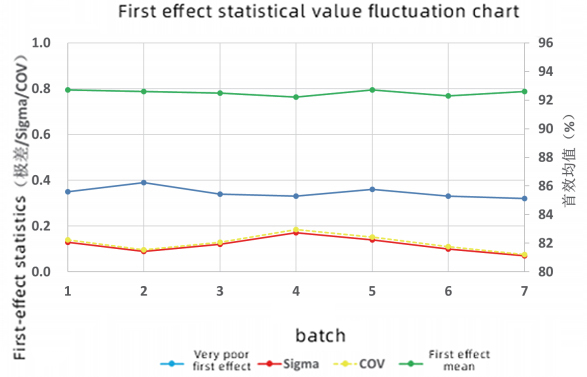
4. Automatic assembly of silicon-carbon negative electrode sheets |
·The first efficiency fluctuation of the automatically assembled silicon-carbon half-cell is small. The sigma value of each group of discharge/charge gram capacity is less than 6. The range of each group of discharge gram capacity is less than 21.5mAh/g, and the range of each group of charge gram capacity is less than 20.9mAh/g; the COV value of each group of charge/discharge gram capacity is less than 0.31%;
·The electrochemical performance of the silicon-carbon half-cell was evaluated, providing a high-precision, high-reliability standardized solution for the research and development of high-expansion negative electrodes, helping to achieve a breakthrough in the energy density of the next generation of lithium-ion batteries.
 |  |
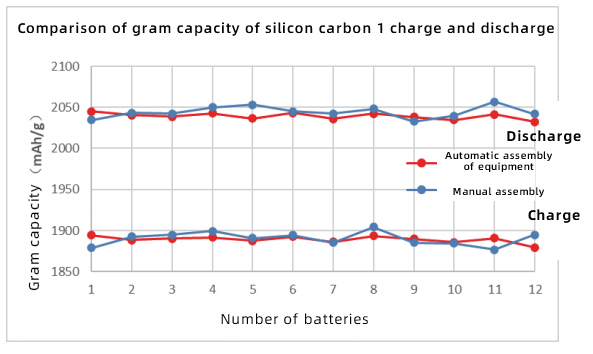
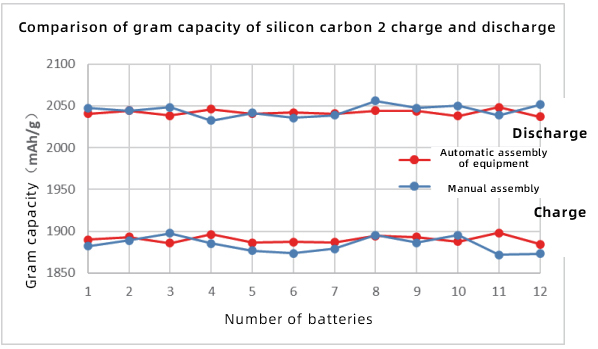
5. Comparison of manual and automatic power-off equipment assembly data |
·The range of the automatic assembly of silicon-carbon material charge and discharge gram capacity is 11.7~14.7mAh/g, and the σ value is about 3.54~4.64, while the range of the manual assembly is 13.4~23.74mAh/g, and the σ value is about 4.37~7.16;
·The average value of the automatic assembly and manual assembly is close to each other, but the data stability of the automatic assembly is better than that of the manual assembly.
 |  |