







 【关注川源科技HiCY】
-

 服务热线 400-700-2017
服务热线 400-700-2017
服务热线 400-700-2017
搜索更多信息

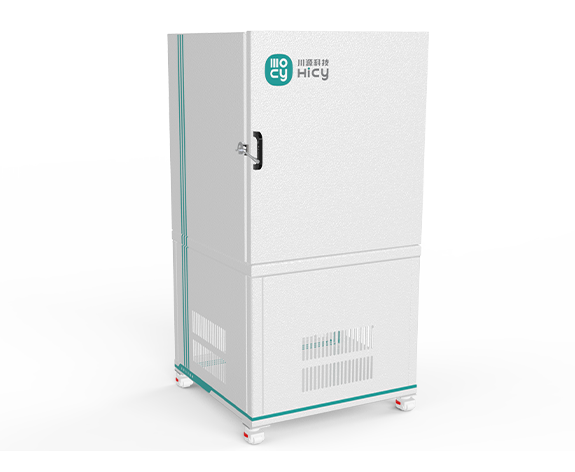
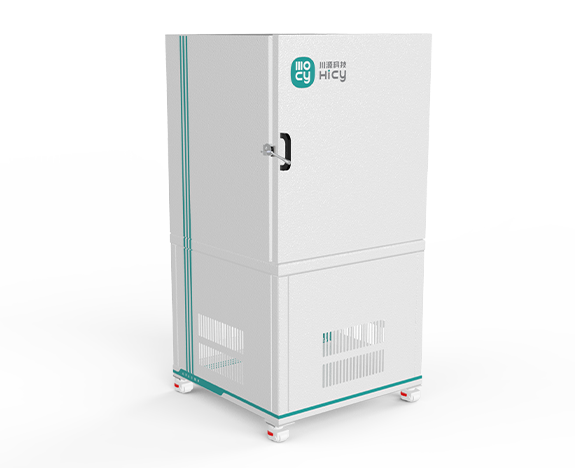

We are committed to solving the problems of equipment dispersion, uncontrollable temperature rise, structural defects and human interference in traditional testing, and realizing controllable rapid detection and visual quantitative evaluation of thermal stability of isolation membranes
Application Areas

· Development of diaphragm base membrane
Design evaluation of diaphragm base membrane formula, processing technology, etc.
· Development of coated diaphragms
Evaluation of the effect of coating on closed-cell temperature and whether it delays/inhibits diaphragm rupture
· Production stability monitoring
Stability evaluation of diaphragm incoming materials, diaphragm processing, etc.
Multifunctional integrated design |
High-speed dynamic pressure holding control |
High-speed dynamic pressure holding control |
High-precision parallelism control |
Multiple measurement modes available |
High temperature stability components |
Model | AF-S300 | AF-S400R |
Test Principle | Resistance mutation method | Traffic mutation method |
Test Beat | 1.5 hours of data | One set of data per minute |
Applicable samples | Diaphragm | |
Test temperature | RT~250°C | RT~250C |
Test conditions | ·Mold diameter: 5*5cm ·Resistance range: 0~3kΩ | ·Mold diameter: 5*5cm ·Pressure range: 0~5kPa ·Airflow test range: 30~1500s/100mL |
Measurable parameters | Temperature, resistance, closed cell temperature, film breaking temperature | Temperature, flow rate, closed cell temperature, membrane rupture temperature |
Features | ·Precise temperature control, real-time linkage monitoring of resistance and temperature dual parameters ·Intelligent algorithm automatically extracts membrane closure and membrane rupture temperature ·Multiple safety protections, automated and efficient testing ·Fully automatic measurement software with multiple account login permissions | ·Precise temperature and pressure control, real-time linkage monitoring of airflow temperature and dual parameters ·Intelligent algorithm automatically extracts membrane closure and membrane rupture temperature ·Multiple security protections, automated and efficient testing ·Fully automatic measurement software with multiple account login permissions |
Equipment size (L*W*H, mm) | 330*400*600 | 720*450*350 |
Equipment weight (kg) | 40 | 50 |
Power (W) | 1000 | |
The separator is one of the main components that affect the performance of battery safety characteristics. The closed-cell temperature and membrane rupture temperature are important characteristic parameters for evaluating the separator and thermal safety performance. At present, the detection methods for these new characteristic parameters are immature and non-standard.
Resistance method Based on the effect of the microstructure change of the diaphragm at high temperature on the wettability of the electrolyte,the closed-cell temperature is determined by measuring the change in its resistance value. | Air permeability method By monitoring the change in resistance of gas penetrating the diaphragm, the closed-pore and membrane-breaking temperatures can be quantified. |
Multifunctional integrated design Modular test unit Centralized data management Compatibility expansion | High-speed dynamic pressure holding control Dynamic load regulation Pressure precision control Pressure-temperature coupling | High-precision parallelism control Servo motor positioning Optical calibration system Rigid structure design | High temperature stability components High temperature resistant materials Active cooling system Thermal expansion compensation |
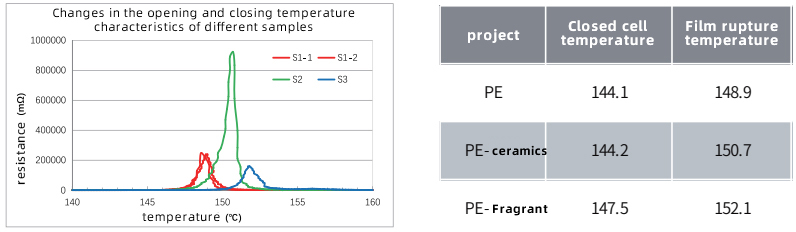
1. Diaphragm thermal closure and membrane rupture temperature test |
·The thermal stability of PE after modification is significantly higher than that before modification (thermal closure and film rupture temperature);
·The mixing of large and small particles can improve the energy density and power performance of the battery cell; the mixing of materials with different particle sizes can improve the compaction density of the material.
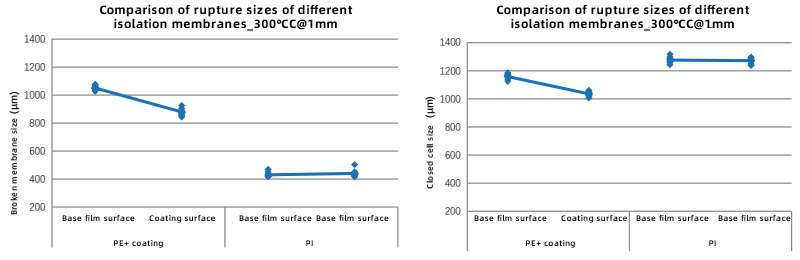
2. Comparison of the rupture size of different isolation membranes |
·PI isolation film has significantly better thermal opening and closing performance than PE-based isolation film;
·After coating, the thermal stability of the isolation film is improved.