




 【关注川源科技HiCY】
-

 服务热线 400-700-2017
服务热线 400-700-2017
服务热线 400-700-2017
搜索更多信息

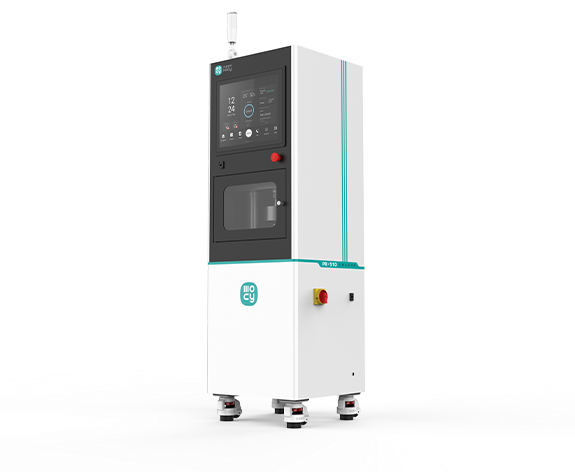
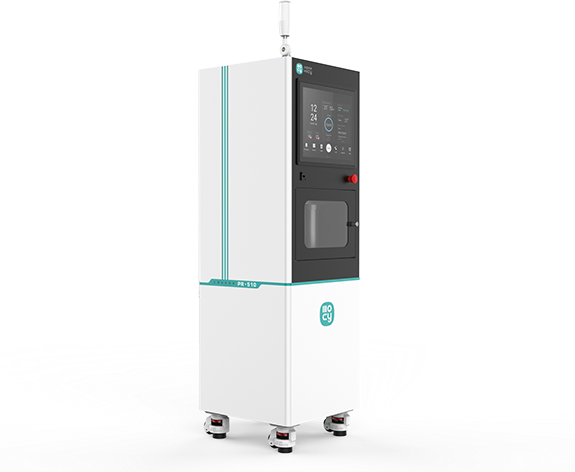

Committed to solving the pain points of low test efficiency and poor consistency in traditional powder resistance testing, and realizing simultaneous multi-channel measurement of powder compaction density
Application Areas

·Battery material research and development
·Battery manufacturing and quality control
Quality consistency evaluation of powdered materials
Screening of abnormal batches of raw materials/process parameters
·Scientific research
Study powder microstructure, conductivity mechanism, particle contact behavior
New multi-probe technology |
Simultaneous multi-channel measurement at one time |
One-stop testing |
Exclusive PCT patent technology |
Multiple measurement modes |
One model fixture compatible |
Device Model | PD310 | PD510 |
Test Principle | Two probes | |
Test Beat | A single test of a set of data | |
Test subjects | Positive electrode powder; Negative electrode powder; Conductive agent powder such as graphene and carbon nanotubes | |
Test pressure | 1t | 5t |
Resistance range | 0-200MΩ 0-1200MΩ | |
Thickness range | 0-10mm | |
Probe fixture | PR-C13 (single probe fixture) | |
Measurable parameters | Thickness, compaction density, ambient temperature and humidity, pressure, pressure | |
Features | ·Single point, linear, step, pulse and other test modes are available; ·Fully automatic communication connection, one-button automatic zeroing and calibration; ·Measurement number statistics; ·Production measurement auxiliary judgment; ·Standard test data report output; ·Real-time data acquisition record and preview; ·Over-range display; ·Measurement abnormality inspection; | |
Equipment size (L*W*H, mm) | 520*385*580 | 600*485*1700 |
Equipment weight | 100 | 250 |
Power(W) | 400 | 2100 |
In the manufacturing of lithium-ion batteries, the compaction density of the positive and negative electrode powders directly affects the compaction density of the electrode sheets, which in turn determines the core performance indicators of the battery, such as specific energy, internal resistance, cycle performance and electrolyte wettability. It is a key parameter for material research and development, production and quality monitoring.
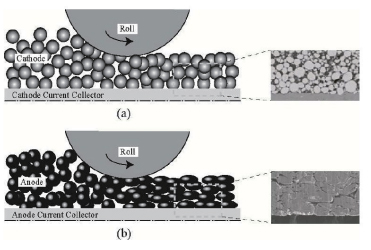
Schematic diagram of the pressure on positive and negative electrode particles before and after roller pressing |
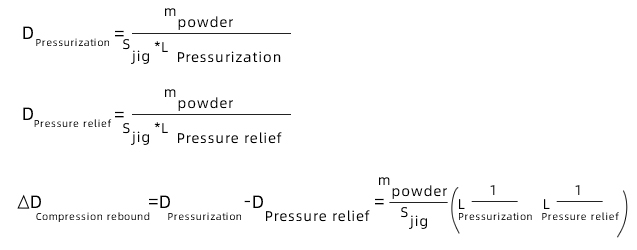
The calculation formula of material compaction density | Impact on the electrode → ↓ Electrode porosity Electrode structure uniformity ↓ Electrolyte wetting efficiency Lithium ion diffusion rate | Impact on battery cells ↓ Battery cell specific energy Battery cell cycle performance Battery cell internal resistance |
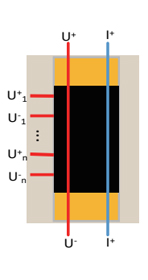
·New multi-probe technology: multiple probes are integrated in the sample loading height direction to detect the resistance of multiple powder segments at the same time;
·Measurement method: each probe applies current and measures voltage independently, and the resistance value is calculated by combining the data of multiple measurement points;
·Data processing and calculation: Combine current, voltage, probe spacing and sample thickness to calculate the resistivity of the sample and analyze the conductivity characteristics;
·Measurement result output: The system displays the resistance value, resistivity and other results in real time.
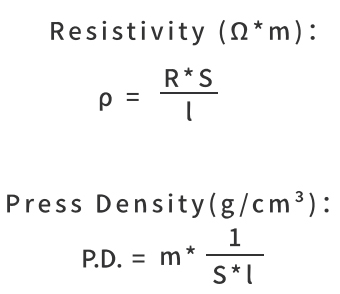
Calculation formula:
|
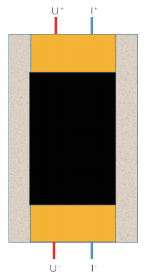
Two probes |
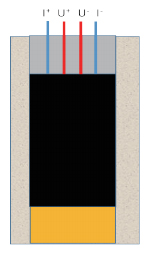
Four probes |
Multi-probe |
High-precision pressure control Maximum pressure 350MPa ±0.3% accuracy High hardness probe Ensures test consistency and durability | Multifunctional integration Integrated multi-parameter acquisition Supports single point/step/pulse mode Fully automatic data analysis | Intelligent reliability One-click calibration Real-time monitoring R&R reliability verification Measurement statistics | Safety Compatibility Ergonomic safety protection design Adaptable to various powder loading slots |
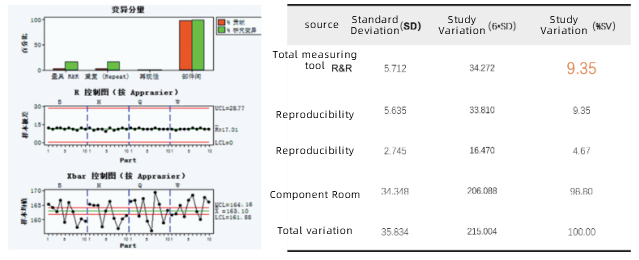
1. Reliability Analysis |
·Controllable pressure is used to ensure contact consistency, thereby ensuring the reliability and stability of the measurement. The equipment test results are reliable and can meet the standard requirements of the measuring tool R&R; the number of categories that can be distinguished by R&R is 9.35;
·The variance component contribution rate and the research variation value also show that the system has good reliability;
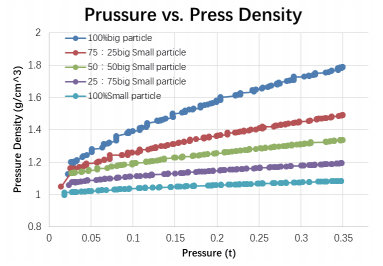
2. Analysis of graphite mixed compaction density |
· Mixing large and small particles can improve the energy density and power performance of the battery cell; accurately detect the difference in compaction density of powders with different mixing ratios;
· Mixing materials with different particle sizes can improve the compaction density of the material.
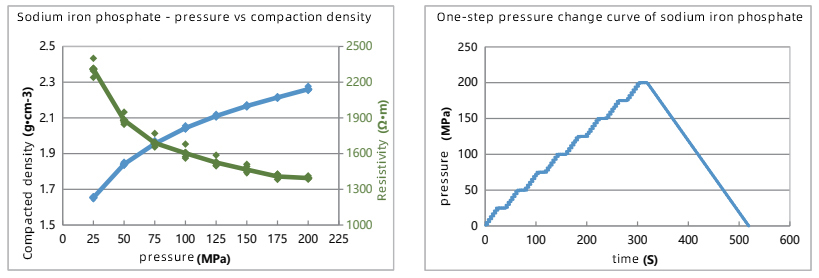
3. Compacted density of sodium iron phosphate under step mode |
·Test the resistance and compaction density characteristics of the sample at different pressure loading rates and pressures;
·As the pressure increases, the resistivity of the powder gradually decreases and the compaction density gradually increases.
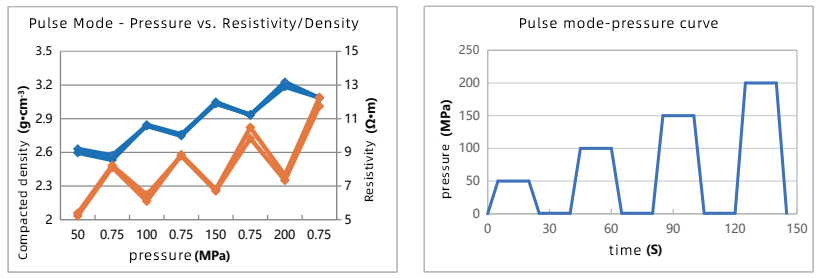
4. Pulse Mode Application |
·The pulse mode is a reciprocating measurement mode in which the system first pressurizes to a high target pressure and then quickly reduces the target pressure; in the pulse mode (8 steps) of 50MPa~200Mpa, the thickness rebound of the ternary material sample is between 100-200μm;
·The compaction change is between 0.1-0.2g/cm3; the compaction is the highest at 200Mpa.